A solar heated pool can reach comfortably warm temperatures that make every swim more enjoyable. With a well-designed solar setup, you can enjoy noticeably warmer water and an extended swimming season beyond the summer months. This guide explores what to expect from a solar pool heater, how temperature levels are achieved, and ways to keep your pool comfortably warm throughout the year.
A solar pool heater gives you warm, comfortable water for more months of the year. With the right setup and good sun exposure, most homeowners notice a clear rise in temperature and a longer swim season.
Solar heating gives you long-lasting comfort, low operating costs, and far more time to enjoy your pool each year.
Your pool won’t heat at the same rate every day. Understanding what affects solar heating performance helps you set realistic expectations and optimize your system for the best results. Several variables determine how quickly and how warm your pool gets, from the weather conditions to the size of your solar array.
Climate and sun exposure play the biggest roles in solar heating effectiveness. Even in a place like California, there are many “micro-climates” throughout the state.
Shade from trees or buildings can block solar panels and reduce heating capacity, so proper placement matters. Even partial shade during peak sun hours reduces heating capacity. Your local climate sets the baseline for what’s possible with solar heating.
The size of your pool determines how much solar coverage you’ll need. During installation, match the panel area to your pool’s surface area for optimal heating efficiency.
As a general guideline:
In short, proper solar panel installation and coverage make all the difference. More panels mean faster heating, steadier warmth, and higher overall efficiency. If your pool isn’t reaching the desired temperature, an undersized setup is often the main reason.
A pool cover dramatically improves heat retention by reducing evaporation, which is the main source of heat loss. Using a solar or automatic cover traps warmth, helping maintain temperature gains. Pools with covers stay noticeably warmer than uncovered pools with identical solar systems. If you’re serious about maximizing your solar heating investment, a quality pool cover is non-negotiable.
Your pool heats faster when starting from a higher baseline temperature. Raising water temperature from 70°F to 78°F happens quicker than climbing from 60°F to 68°F because less total energy is required. Ambient air temperature also matters.
Warm air reduces heat loss from the water surface, while cold air accelerates cooling. Spring and fall bring challenges because cool nights can erase daytime heating gains. The best solar heating results happen when you combine sunny days with warm overnight temperatures that prevent excessive heat loss.
Solar pool heating uses sunlight to gradually warm your pool water. Water is pumped through solar collectors where it absorbs heat before returning to the pool. Continuous circulation keeps the temperature consistent.
Here’s a simple look at how the system maintains that warmth:
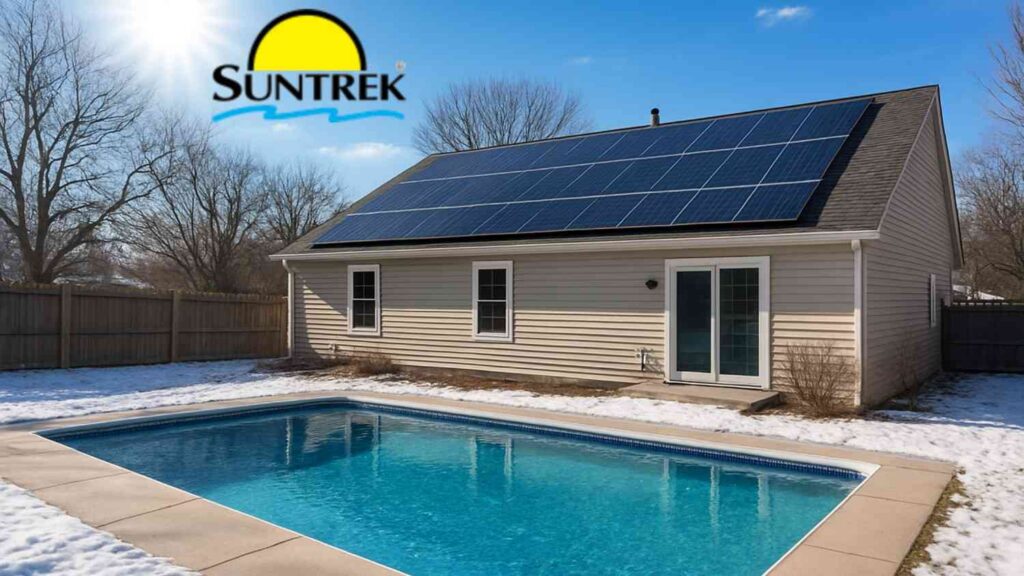
Yes! Solar heating can work in winter, but with limitations that depend on your location. In warmer climates, winter solar heating can help elevate the baseline temperature of the pool. As a result, supplemental heating costs and time required to heat is significantly reduced. Winter has fewer hours of usable sunlight, which reduces how a solar heating system can warm the pool. Running your system during freezing weather also risks damage to panels and plumbing if water freezes inside.
Many pool owners in temperate areas stop using solar heating in the colder months and resume when warmer weather and higher sun exposure allow the system to perform as intended. In colder regions, homeowners often pair solar with a supplemental heater to maintain year-round comfort.
Read More: Winterization for Solar Pool Heating Systems: Protecting Your Investment
Heating timelines depend on several variables. A properly sized solar system typically raises pool temperature per sunny day. Heating typically takes one to two weeks of sunny weather. Smaller temperature increases happen faster.
Larger pools heat more slowly than smaller ones because of the greater water volume that needs warming. Cloudy weather, cooler air temperatures, and lack of a pool cover all extend heating times. Your system works most efficiently when you maintain circulation during daylight hours, allowing water to pass through the panels multiple times per day.
Gas heaters warm the water faster, while solar systems work at a slower, steady pace. Solar heating rewards patience and works best when you start heating early in the season rather than waiting until you want to swim.
No, solar panels only heat water during the day. Running your pump at night circulates water through cold panels, which can actually cool your pool. Most controllers automatically shut off circulation when the panel temperature drops below the pool’s. If yours doesn’t, manually close the solar valve at night.
Most solar heating controllers automatically shut off circulation through the panels when the panel temperature drops below pool temperature. If your system lacks this feature, manually turn off the solar valve at night and redirect circulation through your standard pool plumbing. Run your solar heating system only during daylight hours when panels are actively collecting heat.
With Suntrek, you get custom-built solar collectors made to last and engineered for strong heating power. Our team designs each system to match your pool and roof for smooth, steady performance.
We also use Suntrek ST panels, known for durability and consistent heat gain. With expert installation and reliable service, your system stays efficient year after year.
If you want warm water and lower energy costs, connect with Suntrek and we’ll help you pick the right setup for your home.