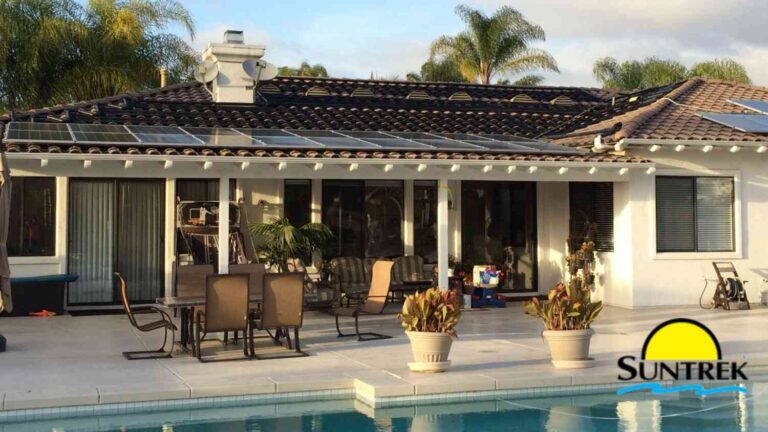
The size you need for a solar pool heater depends on your pool’s surface area, and most pools work best with 50% to 100% panel coverage for heating. Proper sizing gives consistent heat and better long-term value.
Many homes choose the higher end of that range for warmer water or longer months of pool use. Your pool size and your preferred swimming months set the final number, and this blog will guide you through choosing the right system with simple and clear details.
Calculate Your Pool’s Surface Area First
Pool surface area is the main sizing metric because most heat escapes through surface evaporation. Volume matters less than surface area when sizing solar heating systems. Before you can determine how many collectors you need, you can start by getting an accurate measurement of your pool’s size.
Standard Pool Shapes
Rectangular pools use a simple calculation. Multiply length by width to get total square footage. A 15-foot by 30-foot pool has a surface area of 450 square feet. This measurement forms the baseline for all sizing calculations.
Oval pools require the same length-times-width formula. An 18-foot by 33-foot oval pool has a surface area of 594 square feet. Above-ground oval pools have a similar surface area to in-ground versions but lose heat faster through exposed sidewalls.
Irregular Pool Shapes
Freeform and kidney-shaped pools need more complex measurements. Divide the pool into geometric sections like rectangles, circles, and triangles. Assess each section separately, then add them together for the total surface area.
Google Maps satellite view provides accurate measurements for irregular pools. Use the measurement tool to trace your pool’s perimeter, clicking points around the entire edge. The tool displays the total area when you complete the outline by clicking back on your starting point.
Also Read: Winterization for Solar Pool Heating Systems: Protecting Your Investment
Factors That Modify System Size
Beyond basic climate considerations, several site-specific factors influence the final system size you need. Roof orientation, shading patterns, wind exposure, and pool cover usage all affect heating efficiency and collector requirements. Accounting for these variables helps your system work the way it should.
Roof Orientation Impact
South-facing roofs deliver optimal solar collection efficiency. East and west-facing installations need 15-20% additional panel area to compensate for reduced sun exposure. A system requiring 6 panels on a south-facing roof needs 7-8 panels when installed facing east or west.
North-facing roofs are a last resort and provide seasonal heating only. Consider ground-mounted racks or alternative roof sections before installing collectors in north-facing locations. When calculating roof load, Our ST panels weigh approximately 1 lb per square foot when full. Custom collectors weigh approximately 1.5 lbs per square foot when full.
Shading Considerations
Pools with partial shade during peak sun hours need additional collector area to compensate. Heavily shaded pools under tree cover may require significantly more panels than unshaded pools. Direct sunlight is required for collectors to heat pool water effectively, even on hot days, shaded collectors will not perform well.
Wind Exposure Effects
Coastal and mountain pools lose heat faster through wind evaporation. Windy locations may require additional collector area compared to standard configurations. Windbreaks like fences, hedges, or pool enclosures reduce this heat loss factor.
Pool Cover Usage
Pool covers reduce heating demands and allow smaller system installations. Solar blankets reduce evaporative heat loss when covering the pool overnight and during non-use periods. Regular cover use can reduce the number of panels needed, lowering installation costs while maintaining comfortable water temperatures.
Panel Configuration Options
How you arrange and configure your solar collectors affects both installation cost and overall heating output. Understanding panel dimensions, array layouts, and pump requirements helps you optimize your system design for available space and budget.
Single Array vs. Multiple Arrays
Collectors don’t require installation in one continuous section. Split systems across different roof areas or combine roof and ground-mounted panels to utilize available space. Each array connects to the main circulation system through underground piping.
Multiple arrays allow optimization of different roof sections. You can place some panels on the garage and others on the main roof. This flexibility often provides stronger heating results than forcing all panels into one poor location.
Standard Panel Dimensions
Suntrek offers two product lines with different sizing options:
Suntrek ST Panels (Rigid Polypropylene):
- ST-32: 31.38 sq ft (47.24″ × 95.67″)
- ST-40: 39.26 sq ft (47.24″ × 119.69″)
- ST-48: 47.14 sq ft (47.24″ × 143.70″) – recommended for fewer panels and less labor
Suntrek Custom Collectors (EPDM Rubber):
- Any length up to 50 feet per collector strip
- 28-inch manifold at each end
- Can be staggered, pyramided, or wrapped around corners to fit irregular roof areas
Calculate how many panels fit your available roof space before finalizing system size. Measure actual usable area accounting for vents, skylights, chimneys, and required clearances around the installation zone.
Pump Capacity Requirements
Solar systems may require a larger pump than conventional heaters or a separate circulation pump. Collectors create additional flow resistance that existing pool pumps might not overcome efficiently.
Most residential pools already have a sufficient pump, a 1 HP pump handles standard installations. Pipe size depends on flow rate: 1½” Schedule 40 PVC for most residential systems (0–30 GPM), 2″ for larger residential or small commercial (31–50 GPM). Use PVC Schedule 40 pressure-rated pipe only, never ABS or DWV fittings.
Sizing for Extended Swimming Seasons
Your desired usable swim period length significantly impacts system sizing decisions. Summer-only heating requires minimal investment, while year-round swimming in warm climates demands substantially more collector area. Match your system size to your actual pool usage patterns for the best value.
Summer-Only Heating
Pools used exclusively during the summer months need minimal collector panel-to-pool sizing. Size systems at 50-60% of pool surface area for June through August heating in most climates. This provides comfortable temperatures during peak swimming water-temperature comfort window without over-investment in equipment.
It requires 225 to 270 square feet of collectors for summer heating. You can expect to install about 5–6 standard panels, keeping costs low while giving you the heat you need when you actually use the pool.
Spring and Fall Extension
Add 10-20% more collector area to extend swimming into shoulder seasons. Systems sized at 70-80% coverage maintain comfortable temperatures from April through October in moderate climates. Additional panels compensate for lower sun angles and shorter daylight hours during these months.
The same pool needs 315 to 360 square feet of collectors for spring-fall heating. This requires 7-8 panels but extends your swimming time by 2-4 months compared to unheated pools.
Year-Round Heating Goals
Year-round pool heating in warm climates requires 80-100%. Even sunny regions experience reduced solar gain during winter months with shorter days. Full coverage supports dependable heating through the year.
Read More: Roof Attachment Methods for Solar Installations
Indoor and Covered Pool Considerations
Enclosed pools present unique sizing challenges that differ from standard outdoor installations. Indoor pools and screened enclosures affect both heat loss patterns and solar gain, requiring specific adjustments to calculations.
Indoor pools lose less heat to air temperature but gain no direct solar warming of the water surface. These pools typically need larger systems than comparable outdoor pools to compensate.
Screened pool enclosures reduce direct sunlight reaching the water. Add an extra panel or two beyond standard outdoor sizing to maintain target temperatures. The screening material filters some solar energy while protecting from debris and insects.
System Sizing Tools and Professional Assessment
While online calculators and general guidelines provide useful starting points, professional site evaluation ensures accurate system sizing for your specific conditions. Expert assessment from a reputable solar company accounts for nuances that automated tools cannot measure or predict.
Qualified installers conduct a comprehensive site analysis, including roof measurements, shading studies, and sun exposure assessment. They account for factors like roof pitch, structural capacity, and local climate patterns that automated calculators miss.
Start Planning Your Solar Pool Heater
Proper sizing balances adequate heating capacity with cost-effective system design. At Suntrek, our team evaluates your pool’s specific conditions during free consultations. We measure available installation areas, and calculate exact collector requirements for your heating goals. Our solar panel installation experts design systems that maximize performance while fitting your available space and budget.
If you want a longer and more comfortable swim season with the help of solar heating, our team can walk you through the best setup for your pool. Contact Suntrek to arrange your pool heating consultation.