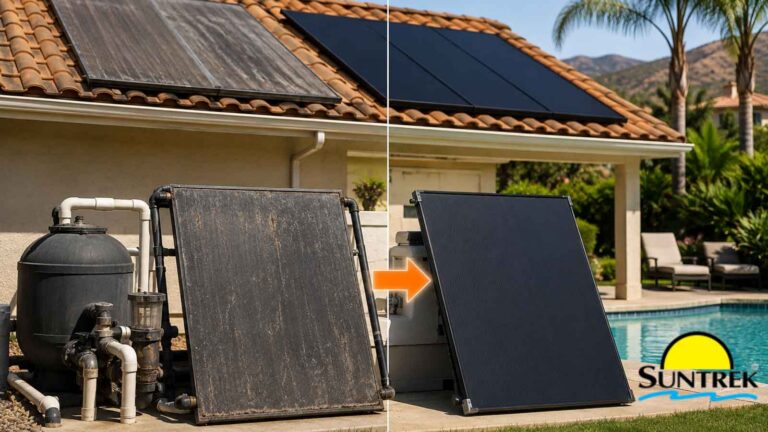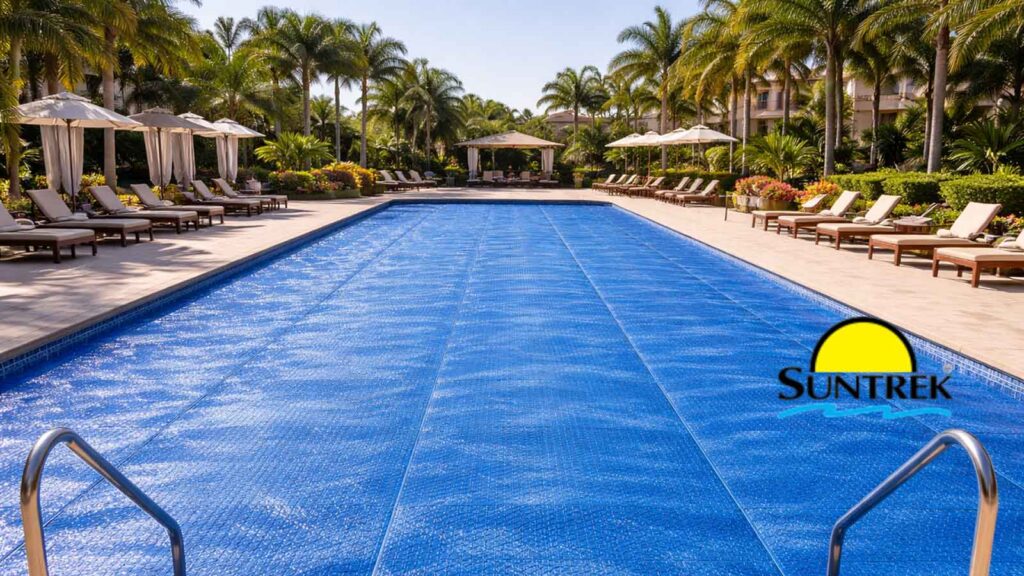
A solar pool heating system and a pool cover work together to perform two distinct functions: the solar collectors raise the water temperature during the day, and the cover retains that heat in the pool overnight. Without a cover, a solar-heated pool loses 50–70% of its daily heat gain through surface evaporation every night. Suntrek Solar has installed and serviced solar pool heater installations across California and Nevada since 1991, and a pool cover is consistently the single highest-impact upgrade an owner can add to an existing solar pool heating system at zero change to your solar equipment.
A correctly sized solar pool heating system in Southern California can raise pool temperatures by 10–15°F above the unheated baseline and maintain comfortable swimming temperatures for six to nine months, and in many parts of SoCal, well beyond that. The secret is not complicated. It comes down to how the system is built, how it operates daily, and how it is sized for your specific location.
Southern California’s abundant sunshine is the foundation of the entire system. Solar pool heating collectors are installed on your rooftop and positioned to capture maximum solar energy throughout the day. With over 280 sunny days per year across most of the region, the system has a reliable, consistent energy source to draw from, one that costs nothing to use. That natural advantage is what makes solar pool heating not just a seasonal solution, but a practical year-round one for most Southern California homeowners.
The system works by slowly and continuously circulating your pool water through the rooftop collectors during daylight hours. As water passes through, it absorbs heat from the sun and returns to the pool warmer than it left. This cycle repeats throughout the day, gradually and consistently building pool temperature without spikes, interruptions, or energy costs. By the time the afternoon arrives, your pool has been quietly heating for hours.
Some cooling overnight is natural for any pool. What sets a properly sized solar heating system apart is how efficiently it recovers. On a typical Southern California morning, the collectors begin operating early and bring the pool back to its target temperature well before midday. By the time you are ready to swim, the system has already done its job. That daily recovery cycle is what keeps your pool consistently comfortable through the cooler months, not just on warm summer days.
See year-round swimming in SoCal for how temperature retention by season affects swimming days across Southern California.
A pool cover is a simple barrier, typically a solar blanket made of UV-resistant bubbled material, that sits directly on the water’s surface when the pool is not in use. It works by trapping heat in the water, reducing evaporation, and blocking overnight cooling. When paired with a solar pool heating system, it acts as a low-effort way to hold onto the heat your collectors worked all day to build.
The solar pool heating system and the pool cover address different parts of the same problem. The collectors generate heat during daylight hours. The cover retains that heat once the collectors stop producing.
In a pool using both solar pool heating and a cover consistently, the daily cycle works like this. The cover holds overnight temperature so the pool starts the morning 3–6°F warmer than it would have uncovered. The solar collectors begin producing heat as solar hours begin.
Because the pool is already closer to target temperature, the collectors reach that target faster. The cover goes back on when the pool is not in use, locking in the day’s heat gain. Over a week of consistent use, this cycle compounds: the pool runs warmer on average, requires fewer pump run hours to maintain temperature, and holds comfortable temperatures later into the fall season.
Pool cover use plays a key role in solar system sizing. A pool that is consistently covered retains heat more efficiently, which means it requires less collector area to maintain a comfortable temperature compared to an uncovered pool.
Suntrek Solar sizes every system based on your pool, location, and usage habits. If you’ve added a pool cover after installation, your system may now heat faster and require shorter daily pump run times due to reduced heat loss.
To match different performance needs, Suntrek Solar offers two primary collector system options:
| System Type | Best For | Key Features | Performance Advantage |
| Suntrek ST | Standard residential pools | Single-glazed collector design, proven absorber technology, durable polymer construction | Efficient day-to-day heating with a cost-effective design suited for most climates |
| Suntrek Custom | Larger pools, extended seasons, or higher heat demand | Double-glazed panels, insulated backing, engineered configurations based on site conditions | Higher heat retention and improved performance in cooler weather or when maximizing season length |
For more details on how sizing works with cover use, see solar pool heating sizing and design.
The simple rule is to cover the pool whenever it is not in use. In practice, these are the moments where consistent cover use has the most impact on solar pool heating performance.
Overnight is when the largest share of heat loss occurs. Covering the pool at the end of each day is the highest-leverage action any solar pool heater owner can take.
If the pool will not be used for several days, a cover eliminates the heat loss that accumulates over that period. A solar pool heating system that has to recover from a four-day uncovered stretch in October uses a meaningful portion of its daily solar window just getting back to baseline. A covered pool over the same period loses only a fraction of that heat and is swim-ready much faster.
Fall and winter are when the combination of solar pool heating and a pool cover makes the largest seasonal difference. Ambient temperatures drop, nights get longer, and overnight heat loss increases.
A solar blanket in fall and winter can extend the comfortable swimming season by four to six weeks beyond what an uncovered solar heated pool maintains. For how solar pool heating systems perform through winter conditions specifically, see winterization for solar pool heating systems.
Pool cover use applies equally to above-ground and in-ground pools, but the heat loss profile differs. Above-ground pools lose heat through the sides and bottom in addition to the surface, which means covers have a slightly smaller proportional impact than on in-ground pools where the surrounding ground provides some insulation.
Both benefit significantly from cover use alongside solar pool heating. For how solar pool heating systems perform across pool types and configurations, see do solar heaters work for an above-ground pool and the lifespan of a solar pool heater for how cover use factors into long-term system durability.
Suntrek Solar has designed and serviced solar pool heating systems across California and Nevada for over 30 years. Contact us today to schedule a sizing review, confirm your solar collectors are matched to your pool and cover setup, or get a recommendation on the right cover type for your system.
Common questions about solar pool heating and pool cover use.
A pool cover is not required for a solar pool heating system to function. However, a cover is the single most effective way to retain the heat your solar collectors produce. A solar blanket retains most of that heat, meaning the same system holds the pool warmer across every season with no change to the equipment or settings.
Yes. A pool with a cover in consistent use requires less collector area to maintain a target temperature than an uncovered pool. Suntrek Solar accounts for cover use when sizing new systems. If you have added a cover to an existing system, a sizing review can confirm if your current collector array is still correctly matched to your actual heat loss rate.
The cover should be removed during solar heating hours so the solar collectors can circulate water freely through the system. The cover goes on when the pool is not in use. The two operate in sequence: collectors heat during the day, cover retains overnight. Running the pump with a cover in place is fine for filtration but the cover does not affect collector circulation.
A solar blanket is the most effective and most commonly used cover with solar pool heating systems. It retains 50–70% of overnight heat loss and is the best option for pools where daily cover use is practical. An automatic cover offers the same retention with less effort at a higher upfront cost. A liquid solar cover is a lower-retention option for pools where a physical cover is not practical.
In Southern California, a pool using both solar pool heating and a solar blanket consistently runs 3–6°F warmer on average than the same pool without a cover. The difference is larger in fall and winter when overnight temperatures drop and heat loss rates increase. A cover also extends the season: a covered solar heated pool in Southern California typically holds comfortable swimming temperatures four to six weeks longer than an uncovered one.