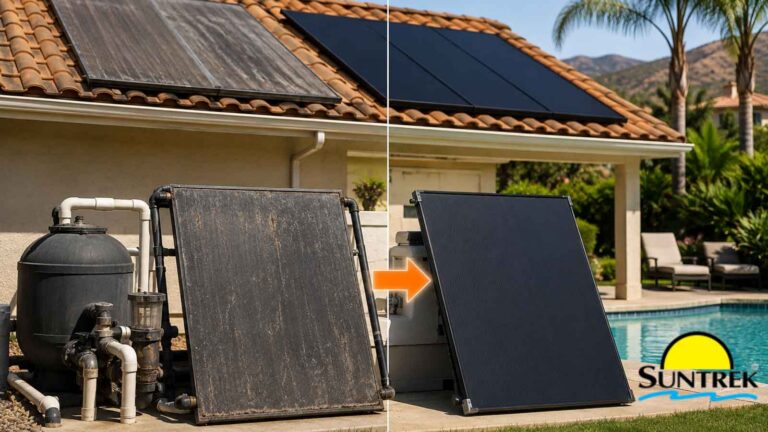
Gas and electric pool heaters run on fuels you keep purchasing. Every hour of operation draws from a supply you pay for, at a price set by someone else. Solar pool heating works from a different structure entirely: the heat source is already on the roof, and the existing pool pump circulates water through the collectors to capture it. No combustion. No separate energy draw for heat generation. For homeowners in Southern California, where pools can be used for much of the year, that difference in operating structure is the starting point for any honest long-term cost comparison. Since 1991, Suntrek Solar has helped homeowners extend their swimming seasons with professionally designed solar heating systems selected and configured for their specific pool and property.
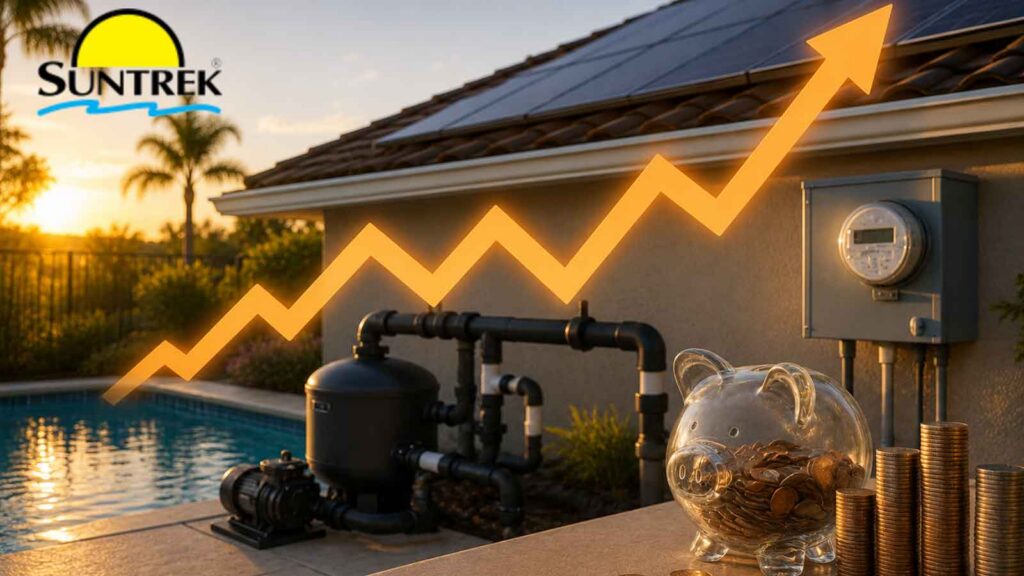
Pool heating is an ongoing operating expense, not just a one-time equipment purchase. Every time a conventional heater runs, it consumes an energy source to maintain the pool temperature. Over a swimming season, those repeated operating costs can become a significant part of the total cost of heating a pool.
Electric pool heaters consume electricity each time they operate to maintain the desired water temperature. For homeowners who heat their pools frequently or maintain warmer temperatures for extended periods, repeated operating hours can increase total electricity use over the course of the swimming season.
Gas pool heaters continue consuming fuel whenever the system operates, so the total cost can build over an extended swimming season. Larger pools, cooler conditions, higher temperature settings, and frequent heating can require the heater to run for longer periods, increasing cumulative fuel use.
A lower upfront price does not necessarily mean a lower long-term cost. When comparing pool heating options, homeowners should consider both the installation requirements and the recurring energy needed to operate the system year after year.
This is one reason solar pool heating deserves consideration. Once sunlight reaches the collectors, the system can use that available solar energy to heat the pool without continuously purchasing gas or using an electric heater to generate the heat.
Gas and electric pool heaters share the same operating logic: generate heat on demand by consuming a fuel or drawing power, then repeat that process every time the pool needs heating. The cost of each heating cycle is determined by what gas or electricity costs at that moment. Use the pool more, run the heater more, pay more.
Solar pool heating breaks that logic at the source. The pool’s existing circulation pump directs water through solar collectors mounted on the roof. The collectors absorb heat from available sunlight and transfer it directly to the water passing through. There is no combustion, no separate energy draw to generate heat, and no per-cycle fuel cost for the heat the collectors capture.
When conditions are suitable for solar heating, an automatic controller activates a valve that redirects circulating pool water through the collectors. The collectors absorb solar heat, transfer it to the water, and return the warmed water to the pool. The pump that already runs your pool filtration system handles the circulation. For a detailed explanation of the relationship between collectors, controls, and the circulation system, see how solar pool heating works.
A gas heater’s operating cost depends on natural gas prices. An electric heater’s operating cost depends on utility rates. Both are outside the homeowner’s control and subject to change over a billing cycle, a season, or a decade. Solar pool heating’s primary heat source does not have a per-unit price. The collectors capture what is already available at the property. That structural difference, not any particular rate environment, is what makes solar pool heating a different long-term cost proposition than conventional heating.
Solar heating output is measurable. Suntrek Custom EPDM collectors are rated at 1,024 BTU per square foot per day, and optimum system sizing targets collector coverage at 80–100% of the pool’s surface area. That said, realized performance depends on available sunlight, roof orientation, shading, plumbing configuration, and desired water temperature. Those factors determine how much of the collector’s rated output the system can actually deliver at a given property.
The long-term value of solar pool heating comes from the way the system uses sunlight instead of requiring a continuous supply of purchased fuel to generate heat. That gives homeowners a different operating-cost structure from gas or electric pool heating while also providing a system designed for years of use.
Solar pool heating does not require homeowners to purchase gas or electricity for the heat the collectors capture. Suntrek Custom flexible EPDM collectors output 1,024 BTU per square foot per day and are documented for a lifespan of 20+ years. Over that service horizon, the heat delivered by the collectors carries no per-cycle fuel cost. A gas or electric heater producing equivalent BTU output draws from a purchased energy supply every time it runs. That gap in operating cost structure compounds over a swimming season, and over years of use.
California’s climate allows many homeowners to use their pools for much of the year, but water temperatures can still become uncomfortable during cooler periods. Solar pool heating can help extend the usable swimming season by adding heat when sunlight is available. By using solar heat when conditions are favorable, the system can reduce the need for conventional heating during periods when additional heat is needed.
Solar pool heating changes how homeowners pay for pool heating. Instead of purchasing gas or using electricity each time conventional equipment generates heat, the solar system uses sunlight captured by the collectors to warm circulating pool water. That shifts the operating cost equation: the energy used to heat the pool is captured on-site rather than billed per use.
For homeowners comparing long-term options, this difference in operating cost can be just as important as the initial equipment and installation expense.
The performance and long-term value of a solar pool heating system depend heavily on how well the system is matched to the property.
Pool surface area, desired water temperature, roof space, sun exposure, plumbing layout, and collector placement all influence the amount of solar heating required.
Suntrek Solar’s solar pool heating sizing and design process considers these factors to create a system around the property’s specific requirements.
The roof itself can affect which collector configuration makes the most sense. The Suntrek ST solar pool heating collector is a rigid polypropylene collector suited to standard rectangular roof layouts. Suntrek Solar’s solar pool heating products also include the flexible Suntrek Custom collector for roofs with obstacles or irregular layouts.
Heating the pool is only part of maintaining a comfortable water temperature. Homeowners can also reduce unnecessary heat loss by using a pool cover, limiting evaporation, and making sure the pool and circulation equipment are operating properly.
Regular solar pool heating service and maintenance can help keep collectors, plumbing connections, valves, circulation equipment, and controls operating properly.
Solar pool heating can be a strong alternative to gas or electric heating, but homeowners should evaluate the property before choosing a system. Factors such as available sunlight, pool size, roof space, and the desired swimming season can all influence how a solar heating system should be designed.
An undersized system will rely more heavily on supplemental gas or electric heating to maintain comfortable water temperatures, which reduces the long-term cost advantage solar provides. Getting the sizing right from the start means the collectors can carry the majority of the heating load through the swimming season without the system falling short during cooler periods.
Roof orientation, usable roof area, shading, and the location of existing plumbing can affect where collectors can be installed and how they connect to the pool’s circulation system. The property’s layout should be evaluated before installation to determine the most practical collector placement and plumbing configuration.
California properties receive different amounts of sunlight and experience different seasonal conditions, so system design should account for the property’s location. Suntrek Solar serves homeowners throughout Southern California and Northern California, as well as Las Vegas, NV, where local climate and pool-use patterns can influence solar heating requirements.
Homeowners planning a new pool or construction project may also benefit from understanding why builders are partnering with solar pool heating companies in California.
Solar pool heating pricing varies because every installation has different requirements. Pool size, collector coverage, roof configuration, plumbing needs, installation complexity, and available roof space can all affect the overall project cost.
Suntrek Solar provides additional information about solar pool heating pricing so homeowners can better understand the factors involved.
Homeowners may also explore available solar financing options when evaluating the upfront cost of a solar installation.
For California homeowners comparing pool heating options, solar can be a practical choice for reducing reliance on purchased gas or electricity while extending pool use throughout the year. The right system depends on factors such as pool size, available sunlight, collector coverage, roof space, and the property’s plumbing layout.
Suntrek Solar has been designing and installing solar pool heating systems since 1991 and has served more than 30,000 customers. Its Suntrek Custom system uses flexible EPDM collectors with a documented lifespan of 20+ years and a 15-year warranty, providing a concrete long-term value point for homeowners comparing solar with conventional pool heating equipment.
Suntrek Solar serves homeowners throughout Southern California and Northern California, as well as Las Vegas, NV. If you’re considering solar pool heating for your home, contact Suntrek Solar to discuss your pool, property, and heating goals.
Solar pool heating can be a practical alternative to gas or electric heating for homeowners who want to reduce their reliance on purchased fuel or electricity for pool heat. The best option depends on the property’s sunlight, roof space, pool size, desired temperature, and swimming season.
No. Solar pool heating uses sunlight to provide heat, but homeowners still have costs associated with installation, pool circulation, maintenance, and other equipment.
Yes. Many existing pools can be evaluated for solar pool heating. A professional assessment can consider the pool, roof, plumbing, available sunlight, and installation space.
Solar pool heating’s operating cost advantage is structural, not rate-dependent. A gas heater costs money to run whenever gas prices are high or low. An electric heater draws from the grid regardless of what the utility charges that month. Solar collectors capture heat from sunlight already available at the property. That dynamic does not change when SCE or SoCalGas adjusts its rates. Utility pricing may prompt homeowners to evaluate their options, but the case for solar pool heating is the same in any rate environment.
The lifespan of a solar pool heating system depends on the equipment, installation, environmental conditions, and maintenance. Regular professional service and maintenance can help support reliable system performance over time.
System sizing depends on factors including pool surface area, desired temperature, roof size and orientation, sunlight, plumbing, climate, and collector placement.