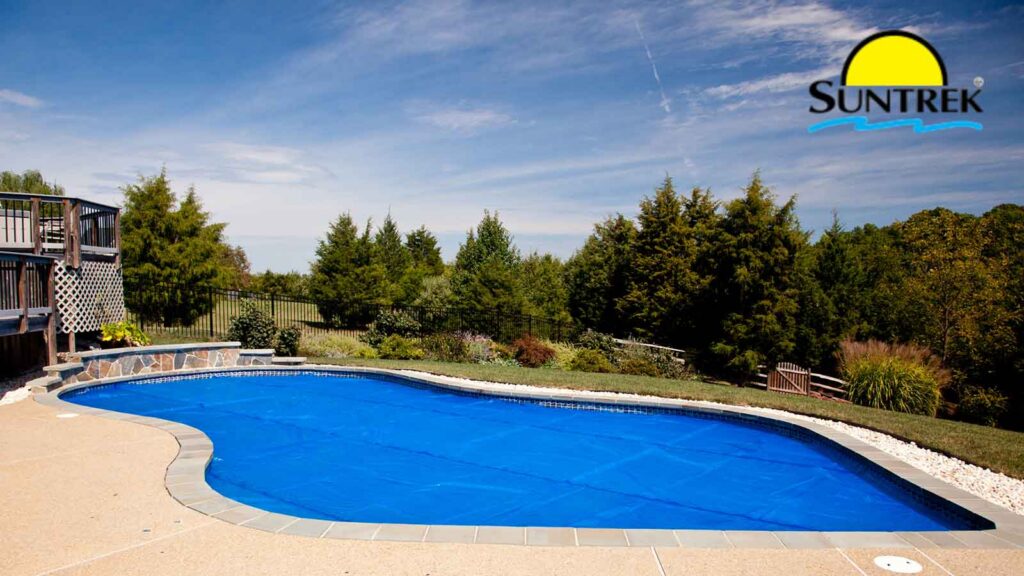
California Title 24 requires that new residential pools and major renovations use a compliant heating source such as solar heating, a heat pump, or a pool cover to meet energy efficiency standards, as explained in the California Title 24 2026 pool heating requirements. Under Title 24, residential pools must meet a minimum solar collector coverage of 60% of the pool surface area, while commercial pools must meet a higher threshold of 65%.
Solar pool heaters use rooftop collector panels to warm water with solar thermal energy, while heat pumps transfer heat from ambient air to pool water using electricity. Solar systems have higher upfront costs but zero ongoing fuel costs, whereas heat pumps cost less to install but require electricity to operate; both options meet Title 24 compliance.
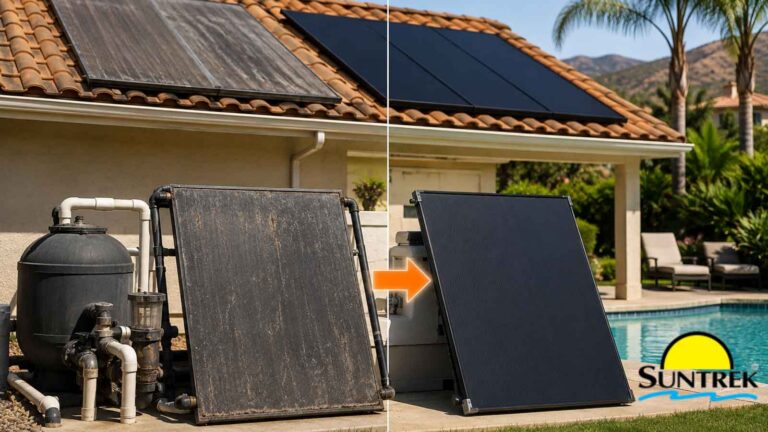
A solar pool heater is a thermal system that circulates pool water through rooftop or ground-mounted collector panels, absorbing heat from sunlight before returning the warmed water to your pool. Suntrek installs two main types of collectors: Suntrek Custom (flexible EPDM rubber) for complex roof layouts and Suntrek ST (rigid polypropylene) for standard rectangular roofs. Both panel types are detailed on the Suntrek solar pool heating products page.
Water from your pool is pumped through the solar panels, where it absorbs heat from sunlight before returning to the pool. This process illustrates exactly how solar pool heating works, converting solar energy into thermal energy to gradually raise water temperature. Systems are sized so that collector coverage equals 80–100% of your pool’s surface area for full heating performance, though even 50% coverage produces noticeable temperature gains.
Proper system sizing depends on pool surface area, roof orientation, and local climate. Suntrek’s solar pool heating sizing and design process accounts for all three. The Suntrek Custom panels produce 1,024 BTU per square foot per day, handle up to 40 psi, and carry a 15-year warranty with an expected lifespan of 20+ years. The Suntrek ST panels handle up to 90 psi and come with a 10-year warranty.
Solar pool heaters eliminate ongoing fuel costs since they rely on sunlight rather than electricity or gas. Unlike conventional heaters, solar systems meet California Title 24 pool heating requirements, specifically exempting solar-heated pools from the mandatory pool cover rule. This provides a concrete compliance advantage while reducing monthly energy expenses.
Proper care ensures your system operates efficiently for decades. Key maintenance steps include:
With these steps, your solar pool heater remains reliable and effective year after year.
Suntrek solar heating is especially effective in Southern California, Northern California, and Las Vegas, where service areas receive 260+ sunny days per year. Seasonal temperature gains typically range 10–15°F above unheated pool temperatures, keeping water warm for 6–9 months. Suntrek uses multiple roof attachment methods for solar installations depending on roof type and structure
A heat pump is a system that transfers heat from the air to pool water using a compressor and refrigerant, rather than generating heat directly. Heat pumps RELY ON AMBIENT AIR TEMPERATURE AND RELATIVE HUMITY FOR PERFORMANCE.Typical residential units have a Coefficient of Performance (COP) of 5.0–7.0, producing 5–7 units of heat for every 1 unit of electricity consumed.
Pool water passes through a heat exchanger where warmth from the air is transferred via refrigerant. The system relies on electricity to power a compressor, fan, and pump, providing consistent heating even in cooler weather. Most installations require a dedicated 50-amp breaker and a 3×3 ft concrete pad.
Heat pumps work best by maintaining pool temperature and can maintain pool temperatures if sufficient air temperatures and humidity levels exist, regardless of sun exposure. This makes makes them suitable for locations that do not have direct sunlight. Seasonal temperature gains depend on unit size, but water can typically be maintained within the desired 78–85°F range during the swim season.
Heat pumps meet California Title 24 2026 pool heating requirements when used with a pool cover, which is required for compliance. Unlike solar systems, heat pumps cannot waive the cover requirement, which is a key distinction for regulatory planning.
Heat pumps use electricity for their operation. Generally speaking, markets with low electricity cost are best suited for heat pump utilization. This is due to long run times with lower BTU output (compared to that of a gas heater. 400,000 BTU vs 140,000 BTU) Proper sizing and energy-efficient models optimize performance, but ongoing fuel costs should be considered when comparing to solar heating.
Heat pumps require periodic maintenance, including inspecting the compressor, checking refrigerant levels, and cleaning air filters. Regular upkeep ensures the system operates efficiently and extends its functional life.
Heat pumps are best for homeowners who don’t have good sun exposure for a solar heating system and live in an area with low electricity rates. They work well for pools that are shaded, indoor, or in climates with high relative humidity. Units are effective when daily use and precise temperature control are priorities.
Homeowners can review the pros and cons of solar, gas, and heat pump systems in our guide to choosing the best pool heating solution.
Choosing the right pool heating system involves understanding real-world installation, compliance, and long-term usability. These practical factors help California homeowners meet Title 24 requirements while keeping their pool comfortable and convenient.
Heat pumps require professional installation by an HVAC-licensed contractor. They provide reliable heating year-round but consume electricity and may produce some operational noise. Units in California are newer to the residential pool market compared with solar systems, so homeowners should plan for proper support and maintenance.
Title 24 requires pool covers for outdoor pools heated with heat pumps or gas heaters. Pools heated exclusively with solar systems are exempt from this requirement, which simplifies compliance while still providing effective heating.
Gas heaters are still allowed as supplemental sources when paired with solar or heat pumps. Many California homeowners combine gas and solar to extend the swimming season, ensuring consistent warmth during cooler months and offering flexibility for varying pool usage.
Comparing solar pool heaters and heat pumps side by side helps homeowners understand both upfront investment and ongoing energy use. Below is a detailed comparison based on installation costs, operating expenses, maintenance, and Title 24 requirements.
| Factor | Solar Pool Heater | Heat Pump |
| Installation Cost | [$5,000-$15,000] | [$8,000-$16,000] |
| Monthly Operating Cost | Near $0 (no electricity or fuel for heating) | $300–$500/month depending on usage and local rates |
| Maintenance | Annual professional inspection, quarterly debris clearing from panels | Compressor checks, refrigerant monitoring, filter cleaning |
| Title 24 Pool Cover Required? | No (solar-only pools are exempt) | Yes |
| Works Without Sunlight? | No – performance depends on sun exposure | Yes – extracts heat from ambient air |
| Typical Lifespan | 15–20+ years (Suntrek Custom) | 10–15 years (varies by model) |
| Noise | Silent operation | Compressor may produce noticeable sound |
Solar pool heaters require a higher upfront investment, mainly due to panel installation and plumbing integration, but the near-zero monthly energy cost offsets this over time. Heat pumps are generally less expensive to install but rely on electricity to maintain temperature, leading to ongoing utility expenses, especially during cooler months.
See current solar pool heating pricing for residential estimates.
Maintenance demands differ as well. Solar systems mainly require surface inspections and debris clearing, while heat pumps need more mechanical upkeep, including compressor checks and refrigerant monitoring.
Overall, homeowners prioritizing long-term savings and minimal operating costs often find solar pool heating to be more cost-effective, particularly in sunny regions like Southern California, Northern California, and Las Vegas. Heat pumps offer the advantage of reliable heating regardless of sunlight but carry higher ongoing electricity costs and Title 24 pool cover requirements. Installation costs vary based on pool size, panel type, and roof configuration.
Understanding the lifespan of a solar pool heater helps homeowners plan for maintenance, replacement, and long-term savings.
Solar pool heaters produce zero emissions during operation. They require no electricity or gas to heat water, making them fully independent of external energy sources. Over a 20-year lifespan, a solar system can eliminate substantial CO₂ compared to a gas heater.
Heat pumps generate no direct emissions but rely on electricity, so their environmental impact depends on the local energy mix. In California, where roughly 50% of electricity comes from renewable sources, heat pump emissions are lower than in regions dominated by fossil fuels, though still higher than a solar-only system.
Selecting the best pool heating system requires balancing multiple factors, including budget, climate, and pool usage. Suntrek offers expert guidance to help pool owners weigh the benefits of solar pool heaters versus heat pumps. Working with a trusted solar company ensures your system performs efficiently, stays cost-effective, and meets Title 24 compliance requirements.
Homeowners comparing features, costs, and system types can reference the 2026 solar pool heater buying guide for a full breakdown.
Does Title 24 require solar heating for pools?
No. Title 24 does not mandate solar specifically. It requires that new residential pools use an energy-efficient heating source (solar or heat pump) or install a pool cover. Solar-heated pools are exempt from the pool cover requirement. Heat pump-heated pools are not.
Do I need a pool cover if I have a solar pool heater?
No. Title 24 exempts solar-only heated pools from the pool cover requirement. Pools heated by heat pumps or gas heaters must have a compliant pool cover installed.
How much does a solar pool heater cost compared to a heat pump?
Solar has a higher upfront cost but near-zero operating cost. Heat pumps cost less to install but use electricity monthly.
Can I use both a solar heater and a heat pump on the same pool?
Yes. Some homeowners install solar as the primary system and a heat pump or gas heater as a backup for cloudy periods or winter months. Hybrid setups comply with Title 24.
How long do solar pool heaters last compared to heat pumps?
Suntrek Custom solar collectors have a 15-year warranty and a 20+ year expected lifespan. Suntrek ST panels have a 10-year warranty. Heat pumps typically last 10-15 years depending on the unit and maintenance.
Do solar pool heaters work on cloudy days?
Solar collectors still absorb some thermal energy on overcast days, but output is reduced. In Southern California, where there are 260+ sunny days per year, cloudy-day performance gaps are limited. Heat pumps operate regardless of sunlight.
What maintenance does each system require?
Solar pool heaters need an annual professional inspection and quarterly panel clearing. Heat pumps require compressor inspections, refrigerant level checks, air filter cleaning, and heat exchanger maintenance. Solar systems have lower ongoing maintenance demands.
Does Suntrek install heat pumps?
No. Suntrek specializes in solar pool heating systems on both the Suntrek Custom (EPDM) and Suntrek ST (polypropylene) panel lines. For heat pump questions, consult an HVAC-licensed installer.
Whether you prefer the eco-friendly savings of solar or the dependable warmth of a heat pump, Suntrek can guide you to the right system for your budget, climate, and pool setup. Contact our team today to schedule a consultation and start enjoying a warm, energy-efficient pool all season long.