Solar pool heating can still perform effectively in cloudy or coastal climates when the system is properly designed for local weather conditions and pool usage goals. While coastal fog, marine layers, and overcast conditions may reduce solar exposure at certain times of the day, solar pool heaters continue collecting and transferring heat using available sunlight. Performance depends heavily on system sizing, collector placement, heat retention, and overall system configuration.
At Suntrek Solar, we design solar pool heating systems based on regional climate conditions, property layout, and desired swim season length. Our systems are customized to help homeowners maximize pool comfort and energy savings even in areas with variable weather and coastal conditions.
Solar pool heating still works in cloudy weather because solar collectors can absorb diffuse sunlight that passes through cloud cover. While performance may decrease compared to bright sunny conditions, the system can continue transferring heat into the pool water throughout the day.
Most solar pool heating systems use sensors and automated controls to determine when conditions are warm enough for heating. Once sufficient solar energy is detected, water is diverted through solar collectors where heat is absorbed and transferred back into the pool. Even during overcast weather, systems may still produce gradual temperature increases depending on cloud density and available sunlight.
Homeowners in cloudy regions should also understand that solar pool heating is designed to maintain and extend comfortable swimming temperatures over time rather than create instant heating like gas systems. Pool covers can help maintain steady water temperatures despite changing weather conditions.
Yes, solar pool heaters can still perform efficiently in coastal climates when the system is designed to account for local fog patterns, marine layers, and seasonal sunlight conditions. Coastal environments may experience reduced direct sunlight during certain hours, but solar pool heating systems can still generate meaningful temperature gains across the swim season.
Many coastal regions still receive sufficient solar radiation throughout the day to support solar heating performance. In fact, it can often extend comfortable swimming temperatures for several additional months each year while avoiding the high operating costs associated with gas or electric pool heaters.
Coastal system performance often depends on factors such as collector sizing, roof orientation, available sun exposure, and overnight heat retention. Homes near the coast may benefit from slightly larger collector areas or optimized mounting locations to compensate for periods of reduced sunlight.
Several environmental and system-related factors affect how efficiently solar pool heating performs in coastal areas. Because coastal weather patterns can vary significantly throughout the day, system design becomes especially important for maintaining consistent heating performance.
The amount of direct and indirect sunlight your property receives plays a major role in system output. Roof orientation, shading from nearby trees or buildings, and collector placement all influence how much solar energy the system can capture throughout the day.
Frequent morning fog or coastal cloud cover can temporarily reduce solar collector efficiency. However, many coastal regions still receive enough midday and afternoon sunlight for solar pool heating systems to continue producing heat gains over time.
Larger collector areas generally improve performance in cooler or cloudier climates. Systems designed specifically for coastal environments may require additional collector surface area to help offset reduced sunlight conditions. For guidance on how much collector area a pool typically requires, see Suntrek Solar’s correct sizing recommendations before selecting a system.
Retaining heat is just as important as generating it. Pool covers help minimize overnight heat loss, especially in coastal climates where cooler evening temperatures and ocean breezes can lower water temperatures quickly.
Flow rate settings and automated solar controllers help optimize when water circulates through the collectors. Proper calibration improves heat transfer efficiency and prevents unnecessary energy loss during low-sunlight conditions.
Marine layers and coastal fog can reduce the amount of direct sunlight reaching solar collectors, which may temporarily lower heating output during certain parts of the day. In many coastal areas, fog and marine layers are most common during the morning hours before clearing later in the day. Once sunlight intensity increases, solar collectors continue heating pool water normally. This means overall system performance often depends more on total daily sunlight exposure rather than early morning cloud cover alone.
Marine environments may also contribute to cooler nighttime temperatures and stronger coastal breezes, which can increase heat loss from the pool surface. Using a solar pool cover can significantly improve heat retention and help maintain more stable water temperatures overnight.
Homeowners should also understand that solar pool heating is typically intended to extend the swim season and maintain comfortable temperatures over time rather than provide instant temperature spikes. In coastal climates, consistent system operation and correct sizing are key to achieving reliable long-term performance.
For current system pricing, visit Suntrek Solar’s solar pool heating pricing page.
Solar pool heating systems designed with accurate sizing, durable materials, and climate-specific configurations generally perform best in variable weather conditions. In coastal or cloudy regions, the right system design helps maximize heat collection during limited sunlight periods while maintaining long-term efficiency and reliability. At Suntrek Solar, we customize every solar pool heating system based on roof layout, climate conditions, pool size, and desired swim season performance.
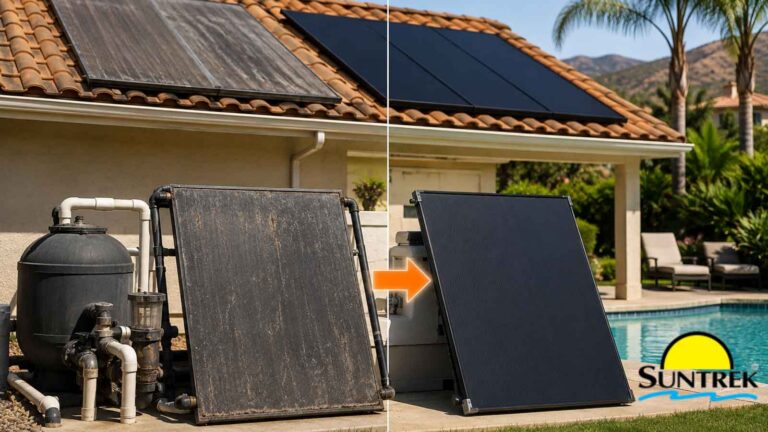
Suntrek ST systems are designed for straightforward installations where roof space and solar exposure allow for traditional panel configurations. These UV-stabilized polypropylene collectors feature a hexagon-shaped manifold with reinforced ribs and an over-molding manufacturing process where the header is fused directly over the tubes, supporting reliable heat capture and long-term structural integrity across a wide range of weather conditions.
ST panels are available in three sizes — ST-32 (4×8), ST-40 (4×10), and ST-48 (4×12) — giving installers the flexibility to match panel dimensions to available roof space without unnecessary overlap or gaps. Their modular structure supports consistent installation quality on both roof-mounted and ground-mounted applications.
Suntrek Custom systems are engineered for properties with challenging roof layouts, limited mounting space, or obstacles such as skylights, vents, hips, and valleys. The collectors are built with flexible, UV-resistant EPDM rubber tubing and a 2-inch diameter polypropylene manifold with 72 water channels, allowing them to conform around roof obstructions while maintaining full heating performance. Each collector strip can be manufactured in custom lengths up to 50 feet, meaning the system is cut to fit the available roof space exactly with no wasted material. In coastal settings where usable roof area may be limited, that precision fit directly translates to better solar collection coverage and stronger heating output.
Homes in cloudy or coastal regions often benefit from larger collector coverage to help offset periods of reduced sunlight caused by fog, marine layers, or cooler seasonal temperatures. Proper system sizing allows the pool to maintain more stable temperatures over longer periods rather than relying on short bursts of intense sunlight. Suntrek Solar designs systems specifically around local climate conditions to help homeowners maximize swim season extension and heating consistency.
Modern solar pool heating systems also perform better in variable climates when paired with automated controls and optimized flow management. Automated controllers monitor roof and pool temperatures to circulate water only when solar heating conditions are favorable, improving overall efficiency and reducing unnecessary operation. Combined with good system sizing and installation, these controls help maintain reliable heating performance throughout changing weather conditions.
Coastal environments expose solar pool heating systems to salt air, UV exposure, wind, and fluctuating temperatures, making durability an important consideration. Suntrek ST and Suntrek Custom collectors are engineered with commercial-grade materials designed for long operational lifespans and long-term weather resistance. Suntrek Custom systems include a 15-year warranty and are built for a documented lifespan of 20 years or more, while Suntrek ST collectors are backed by a 10-year warranty with long-term durability suited to residential pool heating applications.
Professional solar pool heating system design is important in coastal regions because sunlight exposure, marine weather patterns, roof conditions, and temperature fluctuations can vary significantly from one property to another. It helps maintain consistent pool heating performance even in areas affected by fog, coastal winds, or seasonal cloud cover. At Suntrek Solar, we design solar pool heating systems specifically around the property’s environment, swim season goals, and overall heating expectations to help homeowners maximize long-term performance.
Coastal environments expose solar pool heating systems to salt air, UV exposure, moisture, and changing temperatures, making durability a major factor in system reliability. Suntrek ST collectors are manufactured using UV-stabilized polypropylene, while Suntrek Custom collectors are built with EPDM rubber, both of which are selected specifically for their resistance to the conditions coastal properties deal with year-round.
These materials support long-term heat transfer performance without the premature wear that lower-grade components tend to show in salt-air environments. Investing in professionally installed, high-quality collectors reduces the likelihood of early degradation and keeps long-term maintenance costs in check.
Professional installation plays a major role in how efficiently a solar pool heating system operates over time. Suntrek Solar manages every stage of the process, from system design and collector layout planning to installation and final performance optimization. Proper installation helps ensure efficient water flow, optimal collector positioning, and seamless integration with the existing pool equipment. This level of precision helps homeowners achieve more reliable heating performance and a smoother long-term
Call Suntrek today and talk to us. Our team customizes solar pool heating systems based on each property’s environmental conditions and performance goals. We help homeowners design systems that improve swim season comfort while minimizing long-term operating costs.
Does a Solar Pool Heater Work in Winter?
Solar pool heaters can still work during winter, but heating performance depends on sunlight availability, outdoor temperatures, and system size. In milder climates like many parts of California, solar pool heating may continue extending the swim season even during cooler months.
How Long Does It Take for a Solar Pool Heater to Warm a Pool?
Most solar pool heating systems gradually increase pool temperature over several days rather than instantly heating the water. The exact heating time depends on pool size, sunlight conditions, collector area, and weather patterns.
Do Solar Pool Heaters Work on Rainy Days?
Solar pool heaters may still operate during light rain or partial cloud cover if enough solar radiation is available. However, heavy rain and dense storm clouds can temporarily reduce heating efficiency.
What Temperature Can a Solar Pool Heater Reach?
A solar pool heater can typically raise pool water temperatures by 10–15 degrees Fahrenheit above its unheated temperature, depending on system size, weather conditions, and heat retention practices.
Are Solar Pool Heaters Expensive to Maintain?
Solar pool heating systems generally require minimal maintenance because they have few moving parts. Periodic inspections, system checks, and proper water flow maintenance help support long-term performance and efficiency.
How Long Do Solar Pool Heating Systems Last?
Many professionally installed solar pool heating systems can last 20+ years or longer depending on the collector type, environmental conditions, and maintenance practices.
Do Solar Pool Heaters Use Electricity?
Solar pool heaters primarily use solar energy to heat the pool, but the system may still rely on the existing pool pump to circulate water through the collectors.
Is a Pool Cover Necessary With Solar Pool Heating?
A pool cover is highly recommended because it helps reduce overnight heat loss, especially in coastal or cooler climates. Using a pool cover can significantly improve overall heating efficiency and temperature retention.