Monthly costs of $500 to $1,000 are typical for a pool heater, and that expense repeats every month the heater runs, year after year, with no end in sight. Switching to solar pool heating changes that. Once a Suntrek system is installed, the sun does the work and your heating bill significantly drops, and it keeps doing it for 20 to 25 years.
Switching to solar changes what you pay, how long your equipment lasts, and how often you actually use your pool. The same factors that make gas and electricity more expensive have no effect on a Suntrek solar system.Here’s how the two options compare, side by side.
| Factor | Gas or Electric Heater | Suntrek Solar Pool Heating |
| Monthly Operating Cost | Gas: $500–$1,000/mo. Electric/heat pump: ongoing utility cost | Sun-powered. No recurring fuel bills after install. |
| Equipment Lifespan | Gas: 7–10 years. Heat pump: 10–15 years | Suntrek collectors: 10-20 years |
| Annual Servicing | Required. Burners, heat exchangers, compressors need inspection | Not required during swim season |
| Moving Parts | Gas: burner, gas valve, igniter. Heat pump: compressor, fan motor | None. Passive gravity-drain system |
| Fuel Price Exposure | High. Gas and electricity rates fluctuate and continue rising | Zero exposure after install. No ongoing fuel costs |
| Swim Season | Depends on budget and willingness to run monthly heating bill | Triples season: 7 months at 80–86°F pool / 100°F spa |
| Installation Timeline | Typically 1 day | 1–3 days for Suntrek system |
| Payback Period | No payback. Ongoing operating cost every month | 2–3 years on average |
Either way, the equipment bill and the fuel bill both keep coming. You can see the full breakdown here: What’s the Best Heating Solution for My Pool?
A Suntrek solar pool heating system costs $2,500 to $7,000 installed, depending on pool size, roof layout, and system configuration. With a gas heater bill running $500 or more per month through the heating season, a solar system can pay for itself in 2 to 3 years on average.
After that, the heating is essentially free for the remaining 10 to 20 years of the system’s lifespan, aside from routine maintenance, which typically runs a fraction of what you’d spend on gas or electric heating annually. That math only gets better over time as gas prices and electricity rates rise. A Suntrek solar system is completely insulated from both.
Owners who switch to Suntrek solar notice the difference right away, not just in their heating bill, but in how they actually use their pool. Here’s what changes:
The installation process is straightforward and typically completed in one to three days. Suntrek handles everything from the initial consultation through final system commissioning, so there’s nothing for you to manage in between.
Before any work begins, Suntrek handles all required permits and paperwork, including compliance with local building codes and electrical standards. You don’t have to deal with any of it.
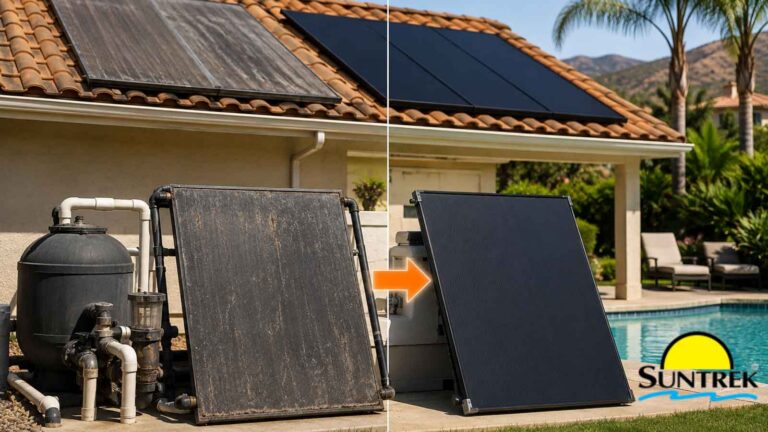
With permits in place, Suntrek’s technicians mount the collectors and connect them to your pool’s existing filtration plumbing. ST polypropylene collectors handle most standard roofs; Custom EPDM elastomer collectors are used where space is tight or the roof layout is complex. No separate pump is needed.
A roof-mounted solar sensor monitors conditions continuously. When the sun is right, the control system opens the diverter valve and routes water through the collectors before returning it to the pool at your set temperature. Set your target and the system handles the rest.
Once the system is running, Suntrek provides ongoing support, regular check-ups, and troubleshooting to keep everything operating at peak performance. For a full breakdown of what’s covered, the Service and Maintenance page has everything you need.
In most cases, homeowners keep the existing gas heater as a backup for rapid spa heating or unusually cold stretches. Solar handles the everyday pool heating load at no cost, while the gas unit sits ready when you need fast temperature recovery. This combination is the approach California pool heating has relied on for more than 50 years, and it’s the reason solar thermal remains the preferred primary system even under California’s Title 24 energy code updates.
For more on how California’s 2026 Title 24 requirements affect pool heating decisions, see: California Title 24 2026 Pool Heating Requirements: What Pool Builders and Homeowners Need to Know.
Most California and Nevada homes have the roof space needed for a solar pool heating system, south, west, or east-facing slopes all work well, as do flat roofs. The main constraint is heavy shading during peak sun hours. If one section can’t support the full system, Suntrek can split collectors across multiple areas or go ground-mounted or patio cover instead.
Suntrek manufactures two proprietary collector systems, each built for different roof conditions and project types:
Both systems are engineered for decades of performance, with fewer roof penetrations than competing products and proven weather resilience. Suntrek has been manufacturing, installing, and servicing solar pool heating systems since 1991, with over 30,000 systems in the ground across California and Nevada. Every installation starts with a free site evaluation and a quote built to your specific pool and roof. To schedule your free estimate or learn more about available systems, call Suntrek at (949) 348-9276