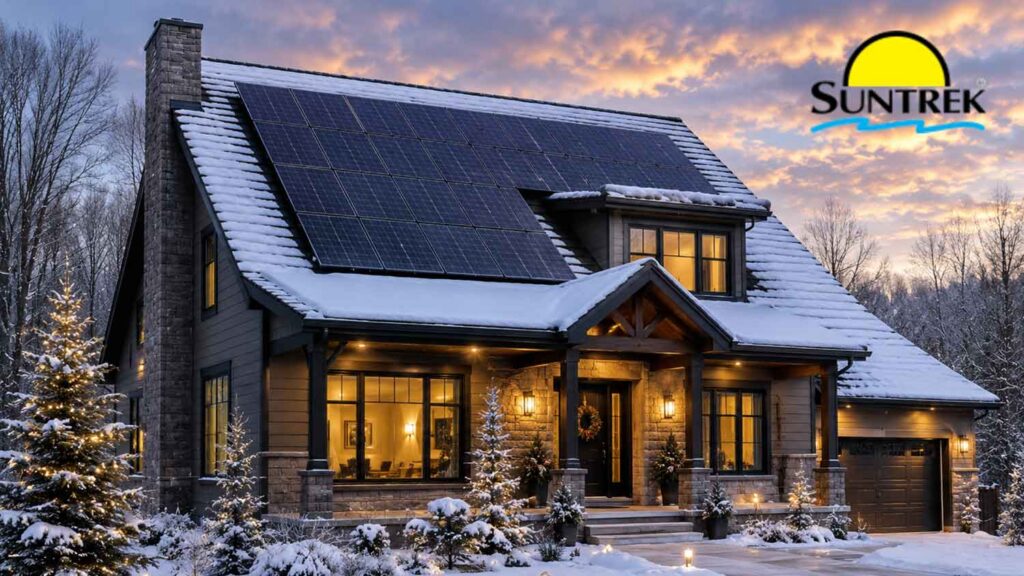
Yes. Solar water heating continues to work in winter across Southern California, Northern California, and Las Vegas, NV. Solar collectors still capture energy on cold and partly cloudy days. A backup gas or electric heater fills the gap when sunlight is limited. The result is consistent hot water throughout the year, regardless of the season.
Yes. Solar collectors absorb available solar radiation even on overcast winter days, not just direct sunlight. Output is lower than on a clear summer day, but the system still pre-heats your water before it reaches the backup heater. Because the water arrives pre-heated, the backup heater uses far less energy to reach the final temperature. A well-sized system can meet up to 80% of annual water heating needs in sunny regions like Southern California, Northern California, and Las Vegas, NV, even accounting for winter months.
Each system design handles cold weather differently. Suntrek Solar offers four system types suited to different climates across their service areas in Southern California, Northern California, and Las Vegas, NV. See how a solar water heater works for a full breakdown of each design.
Performance varies by region, but all three service areas that Suntrek Solar covers are well-suited for year-round solar water heating. Here is what to expect in each location:
Across all three regions, Suntrek Solar designs systems matched to local climate conditions so performance stays consistent year-round.
Yes, and that is by design. Suntrek’s systems connect directly to your existing conventional gas or electric water heater. The solar system pre-heats the water first. The backup heater only activates if the water has not reached the required temperature. In winter, the backup runs more than in summer, but the solar system still does most of the work on most days. Hot water remains available at all times, even during extended cloudy periods.
Your hot water supply is not interrupted. Suntrek’s systems are designed to store a backup supply of solar-heated water. ICS units store up to 40 gallons. During a power outage, the stored hot water remains available. For active systems with pumps, the backup heater can also operate independently of the solar loop if needed. This makes solar water heating more resilient than relying solely on grid-powered electric heaters.
Water heating accounts for approximately 20% to 30% of a typical annual utility bill. A properly sized system saves the average household $450 to $600 per year. In winter, savings are somewhat lower than in summer, but the system still reduces how often the backup heater runs. Over the full year, including winter months, the savings are consistent and compounding as utility rates rise.
No. Suntrek Solar’s systems are built for year-round operation. Closed-loop systems use freeze-resistant fluid that protects collectors in cold climates. Open-loop active systems use drain-down controls to protect pipes and panels automatically. Collectors are constructed with corrosion-resistant collectors and weatherproof materials. Suntrek Solar’s systems are designed to deliver reliable performance for at least 20+ years with proper maintenance.
For most Southern, Northern California, and Las Vegas installations, no special winterization is required. The mild climates in these regions rarely produce freeze conditions that would affect ICS or thermosiphon systems.
For Northern California installations and for open-loop active systems in any location, a periodic inspection before winter is recommended. A technician checks drain-down controls, inspects the collector, and verifies the backup heater connection. If your system develops a fault, our solar water heater repair restores performance quickly. One Suntrek Solar customer noted in their review that the crew performing their winterize service was “very friendly, very helpful, and very professional.”
Solar water heating delivers consistent value in winter for a wide range of property types and locations. Suntrek Solar serves residential, commercial, and government clients across Southern California, Northern California, and Las Vegas, NV. Here is who benefits most:
Our solar company is a manufacturer, equipment integrator, and licensed solar contractor serving Southern California, Northern California, and Las Vegas, NV. Here is what sets Suntrek Solar apart for winter performance:
Get an estimate to find out which system fits your property and location.
Will my solar water heater stop working if it snows in Northern California?
Closed-loop active systems continue operating in cold and snowy conditions because the heat-transfer fluid does not freeze. The backup heater covers demand during extended low-output periods. Snow on collectors temporarily reduces output, but normal performance resumes once the weather clears.
Can I still get hot water if my solar water heater underperforms in winter?
Yes. The backup gas or electric heater maintains your hot water supply at all times. The solar system reduces how much the backup heater needs to run, but it never leaves you without hot water.
Is a closed-loop system required for all of California?
A: No. Southern California and Las Vegas rarely experience freezing conditions. ICS and thermosiphon systems work well in those regions. Closed-loop active systems are recommended for Northern California, where winters are colder.
How do I know my system is winter-ready?
A qualified technician from Suntrek Solar can inspect your system before winter. For active systems, drain-down controls and heat exchangers should be checked to confirm they are functioning correctly. Visit the solar water heater FAQs for more guidance.