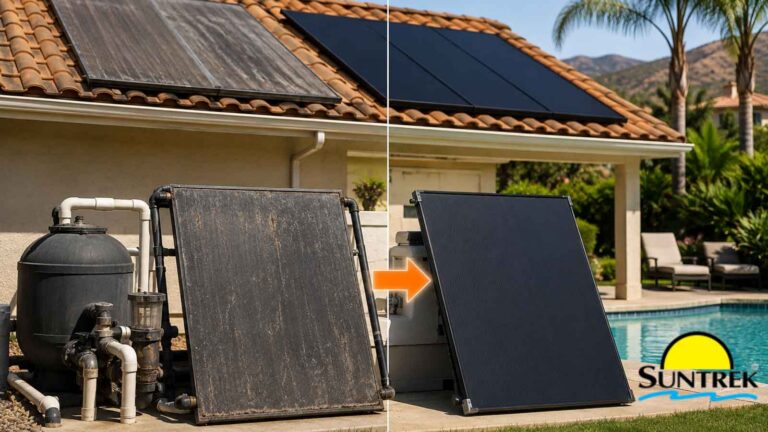
An older roof that is not ready for solar creates two separate costs: the installation itself, and then a panel removal and reinstall when the roof eventually needs attention. Addressing compatibility upfront protects the investment from day one.
Weight limits, roof material, structural framing, and sun exposure all play a role in whether a solar panel installation goes smoothly or runs into complications. Properties across Southern California, Northern California, and Las Vegas, NV, involve different roof types, climates, and building codes.
Suntrek Solar’s collectors are built to last 25 to 40 years. Your roof needs to keep up with them. Installing solar on a roof that needs repairs within five years creates a problem. Addressing the roof first is the smarter approach.
Here is what age and condition directly affect:
A standard residential solar collector weighs between 40 and 50 pounds. That number alone sounds manageable. The real issue is the cumulative load across your entire roof, including mounting hardware, wiring, and racking systems.
Most residential roofs are designed to handle 20 pounds per square foot of load. A properly installed solar system typically adds 2 to 4 pounds per square foot, which falls well within standard tolerances. That assumes your roof structure is sound.
Older homes may have:
A structural assessment before installation confirms your roof can handle the added load without i
Not all roofing materials handle solar the same way. Some require specialized mounting hardware, and others need closer evaluation before installation begins. The mounting method matters, getting it wrong can cause leaks, void your roofing warranty, or leave collectors that shift over time.
Note: The mounting method varies by roof type. Getting this wrong leads to leaks, voided roofing warranties, or collectors that shift over time. Working with an experienced solar company ensures the right hardware and method are matched to your specific roof.
Getting solar installed on an older roof is very much doable. The key is knowing what to look at before the work begins. Skipping these checks is what leads to delays, added costs, and in some cases, a full collector removal and reinstall down the line. Going through this list first helps avoid getting there.
Have a licensed roofing contractor inspect your roof before going solar. They will check for soft spots, damaged flashing, cracked or missing tiles, and signs of moisture damage. Complete any repairs before installation begins.
Asphalt shingle roofs last 20 to 30 years; if yours is nearing that range, replace it before going solar. Metal and concrete tile roofs can last 50 years or more and rarely need attention before installation.
A structural engineer or your solar installer should assess the rafter size, spacing, and overall framing. In some older homes in Southern California built in the 1960s and 1970s, rafters may need to be sistered or reinforced before installation can begin safely.
The angle and direction of your roof directly impact how much energy your system produces. South-facing roofs with a 15 to 40-degree pitch typically perform best. East- and west-facing roofs can still work well with the right system design. Heavy shading from trees or nearby structures should also be evaluated.
The roof is not the only thing to assess. Your home’s electrical panel needs to be compatible with your new solar system. Older 100-amp service panels may need to be upgraded to 200-amp service before installation. Your installer will flag this during the initial assessment.
Older roofs and solar systems can coexist for years without issue. But certain conditions force the collectors to come off before any other work can move forward. Knowing what triggers that process helps set the right expectations from the start.
Suntrek Solar handles the full solar panel removal and reinstallation process, from taking the system down carefully to testing it at full performance once it goes back up.
Sometimes the answer is yes, but not always. Here is a straightforward way to think about it:
Doing both at the same time can also unlock financing options and simplify the permitting process.
Planning a roof replacement with solar already installed? Solar Panel Removal and Reinstallation: What to Expect During a Roof Replacement covers what to expect at every stage.
When you work with Suntrek Solar, roof compatibility is evaluated from the start. During the initial consultation, the team assesses your roof’s size, angle, and condition alongside your energy consumption. This determines which system design fits your property and your goals.
Suntrek Solar also manages permitting and regulatory compliance, which includes verifying that your installation meets local building codes. In California and Nevada, those codes include specific structural and load requirements that vary by jurisdiction. Established in 1991 and serving over 30,000 customers, Suntrek Solar operates as a licensed manufacturer and installer.
Roof compatibility is only part of the equation. How Many Solar Panels Do I Need for My Home? covers what goes into calculating the right number of collectors for your energy needs.
The best first step is a professional assessment. Suntrek Solar evaluates your property, walks you through the options, and handles everything from structural review to permitting.
Serving Southern California, Northern California, and Las Vegas, NV. Contact Suntrek Solar today to schedule your consultation.
It depends on the roofing manufacturer and the installation method used. Some warranties are affected by penetrations made during mounting. A professional installer will use methods that minimize that risk, and any concerns should be discussed with your roofer before work begins.
A structural assessment during the consultation phase will confirm this. The installer evaluates rafter size, spacing, and overall framing condition to determine whether the roof can support the added load or if any reinforcement is needed first.
Yes, as long as the repairs were done correctly and the roof is structurally sound. The condition at the time of installation matters more than its history. A proper inspection will confirm whether the roof is in good shape to move forward.
The timeline depends on system size and the extent of the roof work involved. In most cases, removal and reinstallation are completed within one to two days once the roofing work is done.
Most insurers cover solar collectors as part of the home structure, but it is worth notifying your provider before installation. Some policies require an update to reflect the added value and coverage of the system.
A reputable solar company will flag roof concerns during the initial assessment and walk you through the options. In some cases, minor repairs can be completed first. In others, a roof replacement before installation is the more practical path. Suntrek Solar evaluates both the roof and the energy goals together so the recommendation fits the full picture.