Commercial solar pool heating uses roof- or ground-mounted collectors to maintain pool temperatures in the upper 70s to high 80s for six to nine months of the year, at a fraction of the operating cost of gas or electric systems. Systems for HOAs, hotels, and community pools typically run $12–$25 per square foot installed depending on panel type and system complexity. Suntrek has installed over 37,000 solar pool heating systems across more than 30 years, with commercial projects sized for pools requiring 1,600–2,000+ square feet of collector coverage.
Yes, when it is engineered for commercial demand, solar pool heating is absolutely powerful enough to heat large HOA, hotel, and community pools. What makes it work at scale is math, not optimism. Success at scale comes from careful system sizing and design, ensuring the installation meets the pool’s heating needs rather than providing minimal impact. Key considerations include:
In Southern California and Las Vegas, solar pool heating can maintain comfortable swim temperatures for most or all of the year. Pools in these markets typically stay warm through late fall, with occasional temperature dips during cloudy stretches in early spring. In Northern California and cooler microclimates, solar extends the season significantly but may not cover December through February without supplemental heating. For properties that need guaranteed year-round temperatures, solar is commonly paired with a gas heater or heat pump as backup. For more on seasonal performance, see Year-Round Swimming in SoCal: Is Solar Pool Heating Right for You?
Sizing is based on surface area, not gallons. Commercial systems typically require collector coverage equal to 80–100% of the pool’s surface area for optimum results. Even 50% coverage delivers noticeable heating.
For example, a 2,000 sq. ft. pool surface may require 1,600–2,000 sq. ft. of collector area. Roof space must accommodate this footprint, factoring in orientation:
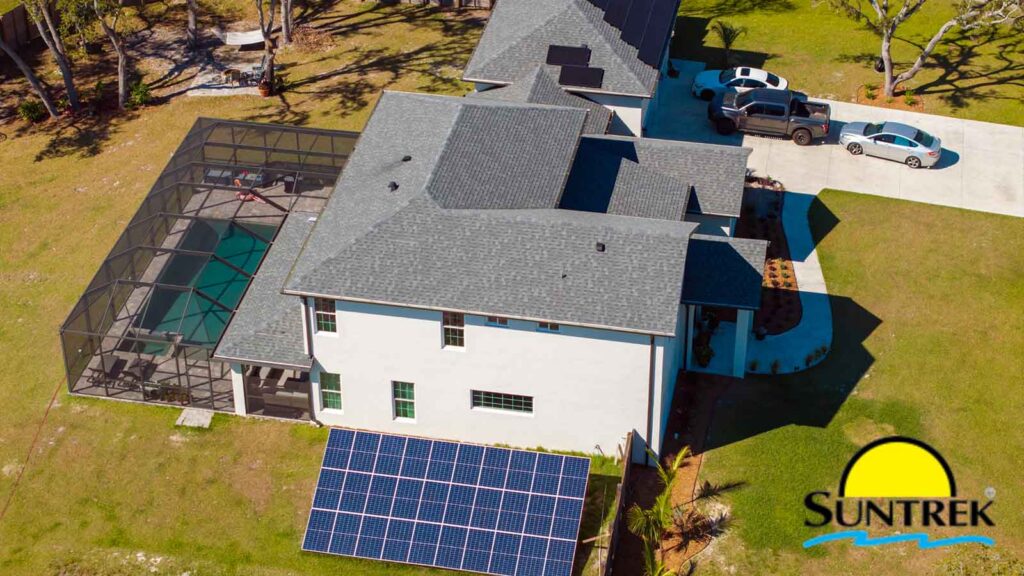
If roof space is limited, ground-mount systems, carport structures, or shade integrations are viable. Plumbing ties directly into the mechanical room using Schedule 40 PVC, with pipe sizing based on flow rate (commercial systems often require 2½” lines).
Cost is often the first question commercial property managers ask when exploring solar pool heating. HOAs, hotels, and community facilities need realistic expectations for installation, materials, and system complexity. Our solar company provides detailed pricing ranges and transparent estimates for commercial systems.
Commercial solar pool heating systems can vary widely in cost. Prices depend on factors such as the total collector area needed, roof type and whether structural reinforcement is required, plumbing distance to the equipment room, mounting method (adhesive vs. clamp), and accessibility or permitting challenges. Calculating the full system weight, including water-filled collectors, is critical to ensure roof load compliance.
Here’s a general pricing guide based on system size and panel type, including parts and labor:
| System Size (sq ft) | Suntrek ST
($12–$20/sq ft) |
Suntrek Custom
($16–$25/sq ft) |
| 300 | $4,800 – $8,000 | $6,000 – $9,500 |
| 400 | $6,000 – $10,000 | $7,600 – $12,000 |
| 500 | $7,200 – $12,000 | $9,200 – $14,500 |
| 600 | $8,400 – $14,000 | $10,800 – $17,000 |
| 700 | $9,600 – $16,000 | $12,400 – $19,500 |
| 800 | $10,800 – $18,000 | $14,000 – $22,000 |
The upfront cost of a commercial solar pool heating system covers more than just panels. Typical installations include all the key components needed for efficient operation and integration with your existing pool equipment:
This ensures the system is ready for efficient operation immediately, with all necessary plumbing and controls included in the quoted installation price.
Several site-specific factors can raise the cost of a commercial solar pool heating system beyond base pricing. These include:
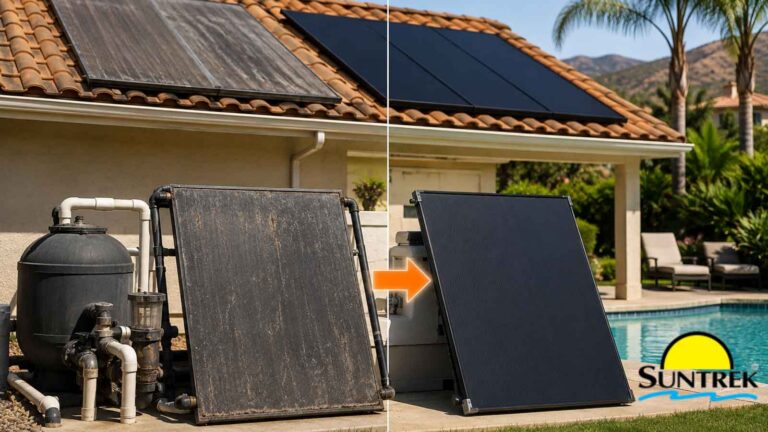
Aesthetic concerns are common, especially in HOA environments. Modern commercial systems are low-profile and designed to integrate cleanly with roofing lines.
Suntrek ST rigid panels mount flush to the roof using a Gator Clamp system, minimizing hardware visibility and roof penetrations. Collectors are matte black and low-profile. Suntrek Custom EPDM collectors lay flat against the surface and can be shaped around vents, skylights, and corners. Because they’re manufactured to exact lengths (up to 50 feet), they maximize coverage without awkward gaps.
Installation methods depend on product choice:
Structural review and load calculations are completed before installation. Proper installation protects roof warranties when done according to code. For details on California’s 2026 requirements, see California Title 24 2026 Pool Heating Requirements.
For HOAs and hotels, operational simplicity matters. Solar pool heating systems are passive water-based systems with no moving mechanical parts inside the collectors. Failures are uncommon. There are no motors or electronics inside the panels themselves.
Suntrek Custom collectors carry a 15-year warranty and an expected lifespan of 20+ years under normal conditions. Suntrek ST carry a 10-year manufacturing warranty. Proper water chemistry and correct plumbing placement (chlorinators installed downstream) protect longevity.
Solar ties into existing filtration systems using a 3-way valve and vacuum relief valve to allow automatic drain-down when the pump shuts off.
Pump requirements are usually met by existing commercial systems, though long pipe runs or large arrays may require verification against flow curves. Pipe sizing must match system flow rate (often 2″–2½” for commercial applications).
Commercial installations are planned to minimize disruption to residents, guests, and daily operations. Here’s the typical sequence:
Phased scheduling is available for properties that need to maintain pool access during installation.
Suntrek has installed 37,469 solar pool heating systems over 30+ years, focusing exclusively on pool heating rather than general photovoltaic systems adapted for pools. That specialization shows in flow rate engineering, pressure tolerance, and water chemistry considerations that general solar companies miss. The majority of new clients come through referrals from existing customers.
Two product lines allow flexibility:
Custom is ideal for complex roofs. ST is ideal for standard layouts and higher-pressure systems.
Our commercial solar pool systems are built for reliability, safety, and code compliance. Our collectors have undergone decades of rigorous testing and certification, including NSF-50 for product safety and SRCC for energy performance. HOA boards and hospitality operators benefit from our fully code-compliant, high-performance systems, which simplify approvals, inspections, and provide peace of mind for long-term operation.
Solar pool heating is a smart choice for commercial properties with available roof or ground space, good sun exposure, and a focus on controlling long-term operating costs. To see if your HOA, hotel, or community pool qualifies, request a commercial assessment. Call Suntrek and we’ll evaluate your property, sizing needs, projected savings, and system layout so you can make an informed decision.
Panel installation typically takes 1–3 days depending on system size. Permitting and HOA approval timelines vary by jurisdiction and can add several weeks to the overall project timeline.
Proper installation following manufacturer specifications and local building codes protects existing roof warranties. Suntrek completes structural review and load calculations before installation and uses mounting methods designed to minimize roof penetrations.
Yes. Solar ties into existing filtration systems using a 3-way valve and vacuum relief valve. Pump requirements are usually met by existing commercial systems, though long pipe runs or large arrays may require flow rate verification. Systems integrate with Pentair, Jandy, and Hayward automation.
Solar output drops on overcast days and during shorter winter daylight hours. In Southern California and Las Vegas, this impact is minimal for most of the year. Properties that need guaranteed year-round temperatures can pair solar with a gas heater or heat pump as backup.
Suntrek provides structural review documentation, system renderings, projected savings data, and compliance paperwork that boards need to evaluate the project. Systems are designed to meet HOA aesthetic guidelines with low-profile, matte black panels that mount flush to the roof.