Solar water heaters are one of the smartest long-term investments a homeowner can make. They reduce energy bills, lower your carbon footprint, and deliver long-term reliable performance, all of which depend on consistent and proper maintenance. Like any home system, neglecting routine upkeep can lead to costly repairs, reduced efficiency, and a shortened lifespan.
Whether you’ve had your system for years or just had one installed, understanding the basics of solar water heater maintenance will help you protect that investment and ensure a reliable supply of hot water year-round.
Solar water heaters work by capturing heat from the sun and transferring it to your home’s water supply, reducing or eliminating the need for gas or electricity. Suntrek Solar offers all types of solar water heating systems, custom-designed for residential, commercial, and government applications. Each integrates advanced solar technology with modern plumbing systems to efficiently heat water with little to no need for gas or electricity.
The system type that best suits a property depends on its climate, setup, and hot water demands, as outlined in the design options below.
The ICS is a simple system that requires no pumps or controls for operation, combining a water storage tank and solar collector in a single unit. Throughout the day, sunlight heats the water inside. When hot water is drawn, normal household water pressure pushes the solar-heated water into a conventional electric or gas heater, which then serves as a backup rather than the primary heat source. Suntrek’s standard ICS stores 40 gallons of solar hot water and is an excellent choice for mild climates that do not experience freezing conditions.
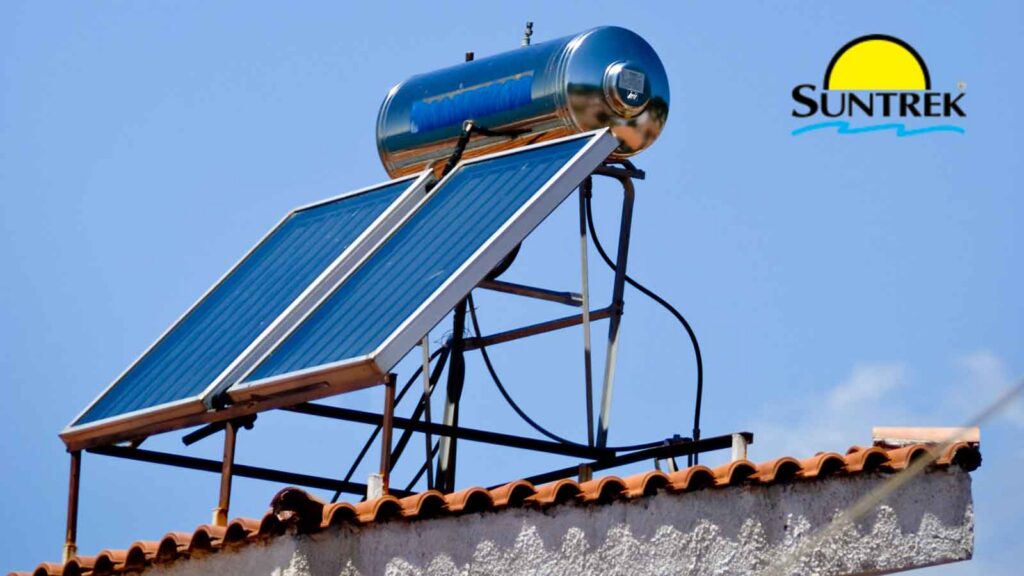
Thermosiphon systems collect heat from the sun and transfer it to water through a natural process, requiring no pumps, sensors, or moving parts. The collector absorbs sunlight and heats the fluid inside. As the fluid warms, it rises to the top of the collector and into an insulated stainless steel tank, displacing cooler fluid that flows back into the collector, where the process repeats.
Active solar water heaters use pumps, often powered by a solar electric module, to circulate water or heat-transfer fluid through solar thermal collectors. There are two configurations:
Open loop active systems heat the water supply directly. A small circulation pump moves water through the solar collector, activated by a differential thermostat controller that senses when heat is available. Solar-heated water is stored in a tank connected to a conventional heater. The collectors and feed lines are protected from freezing by automatic drain-down controls.
Closed loop active systems employ heat exchangers that circulate heat exchange fluids through the panels and feed pipes. The term “closed-loop” refers to the solar exchange fluid being closed off from the external atmosphere or isolated from the potable water. In a closed loop system, the heated solar fluid is pumped through the solar collectors and flows through a copper or stainless steel heat exchanger located near the solar storage tank. The heat from the fluid then transfers to the potable water within the solar storage tank. Another small circulator pump may be used to circulate the water through the potable side of the heat exchanger.
Each system type has distinct components and service requirements, and understanding how a solar water heater works is the first step toward maintaining it properly.
Without regular maintenance, a solar water heater will gradually lose efficiency over time. Scale buildup, degraded insulation, fluid breakdown, and debris on the collectors all quietly chip away at performance. The good news is that most maintenance tasks are straightforward, and a well-maintained system rarely requires expensive repairs.
Annual professional inspections, combined with simple homeowner checks every few months, are the gold standard for keeping your system in peak condition.
Keeping a solar water heater in peak condition requires routine inspection of its key components. Suntrek Solar’s technicians have decades of experience troubleshooting, servicing, and maintaining solar panels and control systems for solar water heating systems, covering every make and model in the industry. A standard solar water heating service includes the following:
The copper pipes and insulation that connect your solar collectors to the storage tank are among the first components to show signs of wear. During a service visit, Suntrek technicians thoroughly inspect all plumbing lines for cracks, deterioration, and loose fittings, as well as the condition of pipe insulation. Damaged insulation allows heat to escape before it ever reaches your storage tank, reducing system efficiency and increasing reliance on backup heating.
Isolation valves allow sections of the system to be shut off for repairs or maintenance without draining the entire system. Technicians test each valve to confirm it opens and closes properly and holds a secure seal. A faulty isolation valve can complicate future servicing and, in some cases, lead to uncontrolled water flow that damages other components.
In closed loop systems, the glycol-based heat transfer fluid is essential for protecting the system against corrosion and freeze damage. Over time, glycol breaks down, becomes acidic, and loses its protective properties. Suntrek technicians evaluate the fluid’s condition and determine whether it needs to be replaced, preventing the kind of internal corrosion that can silently damage pipes, fittings, and heat exchangers.
The storage tank and solar collectors are the core of the system and require careful evaluation at each service visit. Technicians assess the collectors for physical damage, discoloration, or reduced heat absorption, and inspect the storage tank for signs of sediment buildup, corrosion, or structural wear.
The sensors and controller are the system’s brain, determining when the pump activates and how heat is distributed. If these components malfunction, the system may run inefficiently, fail to heat water adequately, or operate at the wrong times. Technicians test the sensors and controller to confirm they are reading temperatures accurately and triggering the system correctly.
A properly functioning solar water heater maintains a specific temperature difference between the collectors and the storage tank, and the pump must circulate fluid at the correct flow rate to transfer that heat efficiently. Technicians measure both to confirm the system is performing within its designed parameters. Deviations can indicate pump wear, blockages, or fluid issues that require attention.
Corrosion is one of the most common and potentially damaging issues in solar water heating systems, particularly at pipe joints, fittings, and tank connections. Technicians conduct a thorough inspection of all accessible components for rust, oxidation, or mineral deposits. Identifying and addressing corrosion early extends the life of the system and prevents leaks or component failure.
In Southern California and Las Vegas, where sunny and dry conditions dominate, the primary maintenance concerns are UV degradation of exposed pipes and insulation, dust and debris accumulation on collectors, and mineral buildup in direct systems due to hard water. Homeowners in these regions should schedule regular inspections of collector surfaces and pipe insulation, particularly after periods of intense heat or high winds.
In Northern California, where cooler temperatures, overcast skies, and seasonal rain are more common, freeze protection becomes a critical consideration. Homeowners in these areas are advised to opt for closed-loop active systems, which use a glycol-based heat transfer fluid to protect against freezing. During extended cloudy or rainy periods, the backup heating element will compensate for reduced solar output, so monitoring energy usage and scheduling timely service visits helps ensure the system continues to operate efficiently through the colder months.
For homeowners still weighing their options, understanding What Is the Purpose of a Solar Water Heater? is a good place to start.
Even well-intentioned homeowners can unknowingly shorten the life of their solar water heater through habits that seem harmless at the time. Being aware of these common missteps goes a long way toward protecting the system and avoiding unnecessary costs. When damage does occur, Suntrek Solar’s repair services cover every make and model of solar water heating equipment. The following are the most common mistakes homeowners make and what to do instead.
Routine homeowner checks are an important part of keeping a solar water heater running well, but there are aspects of maintenance that require trained hands and specialized equipment. A qualified solar company brings the expertise to identify issues that are not always visible to the untrained eye, from degraded heat transfer fluid to subtle drops in pump performance, before they develop into costly repairs.
Suntrek Solar has been servicing and maintaining solar water heating systems across Southern California, Northern California, and Las Vegas for decades. Whether your system needs a routine inspection, a fluid replacement, or a full diagnostic, their licensed technicians are equipped to handle every make and model. Get in touch with Suntrek Solar to request an estimate and ensure your system stays in peak condition.
How often should a solar water heater be serviced?
Solar water heating systems should be professionally inspected at least once a year. In addition to an annual service visit, homeowners are encouraged to perform visual checks every few months, looking for signs of wear on pipe insulation, debris on collectors, and any visible leaks around fittings or the storage tank.
How do I know if my solar water heater needs repairs?
Common warning signs include a noticeable drop in hot water output during sunny weather, unusually high energy bills, discolored or foul-smelling hot water, gurgling or banging sounds from the pipes or tank, and visible leaks. If any of these occur, contact a licensed solar technician promptly rather than attempting a DIY fix.
How often does the glycol in a closed-loop system need to be replaced?
The heat transfer fluid in a closed-loop active system should be tested every three to five years, or as recommended by the system manufacturer. If the fluid shows signs of degradation, such as a low pH level or discoloration, it should be replaced as soon as possible to prevent corrosion and system damage.
Can I clean my solar collectors myself?
Yes, in most cases homeowners can clean accessible collectors using a soft cloth or sponge, mild soap, and water. Abrasive cleaners and high-pressure water jets should always be avoided as they can scratch or crack the glazing. For collectors installed on steep or high rooftops, it is safer to leave cleaning to a professional technician.
What happens if solar water heater maintenance is neglected?
Neglected maintenance leads to gradual efficiency loss, increased reliance on backup gas or electric heating, and a higher likelihood of component failure. Issues such as degraded glycol, corroded fittings, and damaged insulation worsen over time and become significantly more expensive to address the longer they are left unattended.
Does Suntrek Solar service all types of solar water heating systems?
Yes. Suntrek Solar’s licensed technicians service and maintain every make and model of solar water heating equipment, including ICS, thermosiphon, open loop active, and closed loop active systems, across Southern California, Northern California, and Las Vegas, NV.