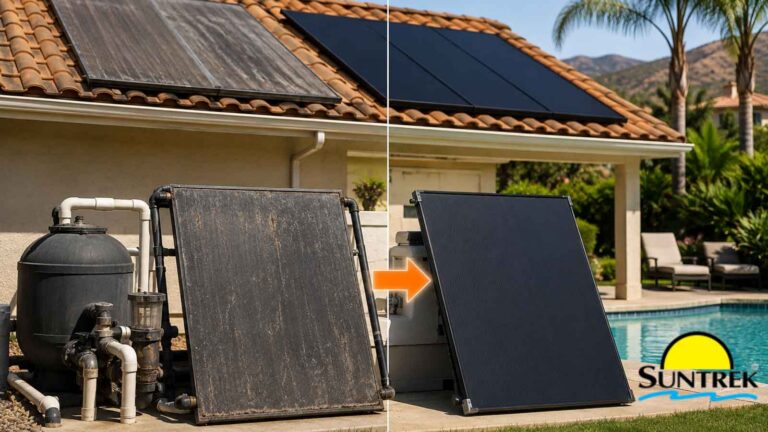
Solar pool heaters warm swimming pool water by using energy from the sun instead of relying on gas or electricity to create heat. During operation, the pool pump sends filtered water through solar collectors, typically installed on the roof. The collectors absorb heat from sunlight and transfer it to the circulating water before sending the warmer water back into the pool. A properly designed solar pool heating system can raise pool temperatures above the normal unheated temperature and can extend the swimming season in suitable conditions.
Since 1991, Suntrek Solar has helped more than 30,000 customers design and install solar heating systems for residential and commercial properties. As a manufacturer, equipment integrator, and licensed solar contractor, Suntrek designs systems around each property’s layout and heating goals rather than using a one-size-fits-all approach.
The basic process is simple: collect sunlight, transfer its heat to the pool water, and continuously circulate that warmer water back into the pool. Understanding how it works is easier when you break the process into a few steps:
This process allows the pool itself to gradually gain and maintain heat without burning fuel every time you want warmer water.
A solar pool heating system relies on automatic controls to determine when solar heat is available and when water should circulate through the collectors. Depending on the system design, components such as the Pentair SolarTouch Controller and Compool Valve Actuator monitor water temperature and automatically direct water through the solar collectors when heating conditions are favorable.
This automation helps the system operate efficiently without requiring homeowners to manually adjust valves or switch the system on and off throughout the day.
The performance of a solar pool heater depends heavily on sunlight, system size, collector orientation, weather, and how much heat the pool loses throughout the day and night. With a properly sized Suntrek Solar system, pool water can typically reach temperatures about 10–15°F above its normal unheated baseline.
Several factors influence the results:
Suntrek Solar reports that a properly designed system can extend a typical swimming season by two to three times, giving homeowners more months to comfortably use their pools.
Proper sizing and designs are important because installing too little collector area can leave the system struggling to reach the desired temperature. Suntrek Solar evaluates the pool and property before determining the appropriate collector coverage and layout.
Important design factors include:
Correct system design balances available space with the amount of solar collection needed to achieve the homeowner’s heating goals.
Suntrek Solar offers two primary products designed for different roof layouts and installation requirements.
Suntrek ST collectors are rigid polypropylene panels suited to straightforward roof layouts. They are available in three standard sizes: 4′ × 8′, 4′ × 10′, and 4′ × 12′. Their modular design makes them a practical choice when the roof provides a relatively clear installation area.
Suntrek Custom collectors are made from flexible EPDM material and can be manufactured in lengths of up to 50 feet per collector strip. Their flexibility allows the collectors to work around vents, pipes, skylights, corners, and irregular roof areas.
Our solar company evaluates all of these factors before installation, designing the system around the actual roof and pool rather than a standard approach
The cost of a solar pool heater depends on the system required for your pool and property. There is no single price that applies to every installation because collector coverage, roof conditions, and heating goals can significantly change the scope of the project.
Several factors can affect the final cost:
Suntrek Solar evaluates these factors before recommending a system, giving homeowners an estimate based on the actual pool, property, and heating goals rather than a one-size-fits-all price.
Solar pool heaters generally require minimal upkeep, but regular inspections and timely repairs help maintain efficient heating and reliable operation. Checking the system periodically can also catch small issues before they affect water circulation or lead to more extensive repairs.
Suntrek Solar can help with:
If your pool is taking longer to warm up, you notice a leak, or the system is no longer working as expected, it may be time for professional service. Contact Suntrek Solar to schedule an inspection, request maintenance or repairs, and keep your solar pool heater working efficiently.
Yes, but heating output is lower when less sunlight is available. Solar collectors perform best during sunny conditions, so weather, season, and cloud cover can affect how quickly the pool gains heat.
A properly sized system can typically raise pool water temperatures by approximately 10–15°F above the pool’s normal unheated temperature. Actual results depend on sunlight, collector coverage, weather, pool conditions, and heat loss.
Yes. In suitable conditions, solar heating can significantly extend the months when your pool remains comfortable for swimming. Suntrek Solar reports that properly designed systems can extend a typical swimming season by two to three times.
Yes. Solar heating can often be added to an existing pool and integrated with the current circulation equipment. The pool equipment, available roof space, plumbing layout, and heating goals should be evaluated before the system is designed.
Not always. Many systems use the pool’s existing circulation pump to move filtered water through the solar collectors. The existing equipment should be assessed to make sure it can support the required flow.
The amount of space required depends largely on the pool’s surface area, roof orientation, sun exposure, and desired heating results. Proper collector sizing is important because insufficient coverage can limit how much heat the system provides.
Solar pool heating systems can provide many years of service when properly installed and maintained. Suntrek solar pool heaters are designed for a lifespan of approximately 20+ years or longer with appropriate care.
Reduced heating, visible leaks, unusual water flow, damaged collectors, or a system that does not turn on when expected can indicate a problem. Suntrek Solar can inspect the equipment, identify the cause, and recommend the appropriate repair or maintenance.